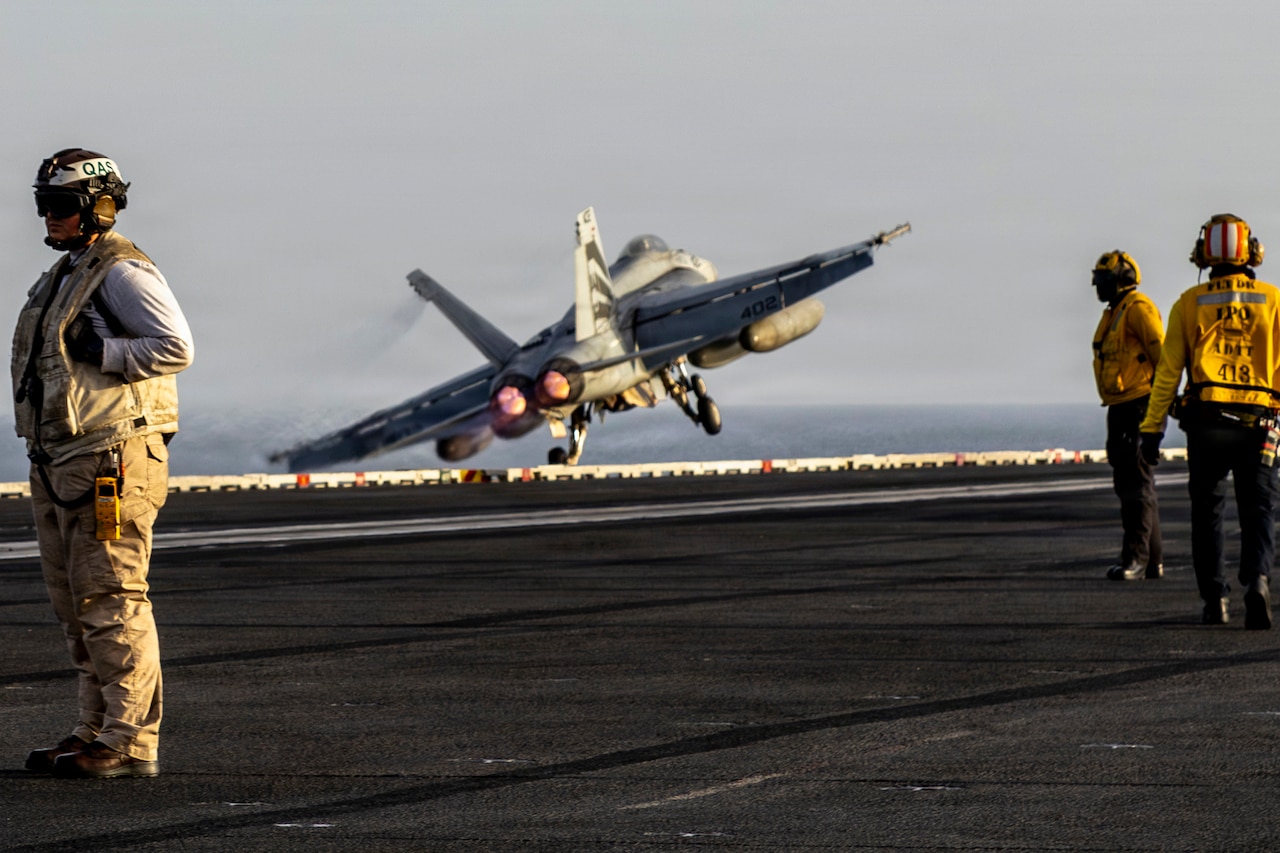
AIRAirspace awareness, track inputs, counter-UAS context.Open air picture →Photo: U.S. Navy / Defense Department.
Iron Major’s Friend is an authenticated administrative workspace for tasks, evidence, approvals and colleague sharing. It is not a substitute for service command-and-control authority.



ATLAS is a software integration and decision-support layer for Army, Navy, Marine Corps, Air Force, Space Force, joint commands and other authorized mission partners. The goal is to connect source evidence and operational context, show uncertainty, support responsible decisions and document verified handoffs. Existing programs of record and commanders retain control; integration and field performance must be independently demonstrated.
Veteran-led ISS LLC: operational experience, implementation science, software engineering and evidence-centered delivery.
Complement service-owned sensors, C2 tools and staff workflows with authorized, role-specific operational context across land, sea, air, space and supporting missions.
Disconnected data and workflows delay coordination, hide uncertainty and make decisions harder to reconstruct.
Ingest, check provenance, reconcile differences, offer options, require human approval, share authorized results and audit outcomes.
A joint task force can confront conflicting reports, a disrupted data link, an aircraft or maritime contact, and delayed coordination at the same time. The Navy, Army, Marine Corps, Air Force and Space Force bring distinct systems and decision authorities. This notional comparison shows the integration gap ATLAS seeks to address; it is not a live DoD demonstration or proof of field acceptance.
The design objective is a shared, source-linked decision record whose presentation varies with the authorized role and mission—not disconnected copies of reality. The Army’s six warfighting functions are one service-specific lens; maritime, air, space and joint staffs require their own doctrinal mappings. The software training experience is a rehearsal, not evidence of operational certification. Compare service mission functions and program offices →
The morning shown is a notional exercise through the real seats. Most live feeds are not yet connected — the platform shows exactly which. No program-of-record integration or authority to operate is claimed.
Choose a domain to explore an existing ATLAS surface. Public photographs show real military or space activity; they do not depict an ATLAS installation or government endorsement.
Existing feeds, sensors, staff tools, TAK / CoT and available partner interfaces.
Provenance, quality, competing explanations, gaps, and operational context.
Authorized personnel review options and approve consequential actions.
Route approved information, record custody, assess results, and adapt.
DiD / triple differences (DDD) require genuine comparison groups, baseline periods and observed outcomes. Where those inputs are absent, ATLAS must show “not established,” not a made-up effect.
Denied, disrupted, intermittent and limited connectivity is the expected condition, not the exception. ATLAS treats offline operation as a first-class capability with explicit custody at every step — and states plainly what each piece has and hasn't proven.
Map area packs from an authorized offline-capable provider can be downloaded and their cached coverage checked; device-local waypoints provide GPS distance/bearing and SafeWalk breadcrumb trails. Public OpenStreetMap tiles are not an offline-download source. No turn-by-turn routing is claimed.
Operator actions authored offline are held in a durable outbox, submitted with idempotency keys to an authenticated server queue (PostgreSQL + encrypted spool), and replayed with per-action receipts. Queued is never shown as delivered.
Cached data carries its age; dropped sources are declared, not silently backfilled; offline writes that cannot be safely queued return an explicit refusal with a receipt instead of a fake success.
Provision the PWA before disconnecting, then use Check Offline Readiness to verify the app shell, cached map coverage and storage status. The edge proxy can select a healthy configured origin; standby hosting still requires account configuration and live verification.
Evidence is software acceptance: service-worker, outbox, tile-pack and queue-lifecycle tests plus a proven server-restart recovery. Field, contested-RF and congested-spectrum certification is not established and is stated as such wherever these capabilities appear.
Command and control, intelligence, fires and effects, movement, protection, sustainment, and training are comparable needs across DoD—but no branch is presumed to use Army doctrine. Open the service-by-service WFF/program-office crosswalk to see candidate integration owners, source evidence and what still needs government approval.
Integration and evidence differ by module; one functioning endpoint does not establish field certification across the whole platform.
Potential users and collaborators span commanders and staff, all service branches and the National Guard, emergency managers, analysts, operators, acquisition offices, technical evaluators, systems integrators, universities and research partners. Engagement does not imply endorsement.
The public deployment is an unclassified evaluation environment. DoD operational ATO, IL-5 hosting, OEM integrations and classified-network authority are not established.
One coordination workflow, with specialized tools and views that retain the same source, task and decision context.
SecureAssure hosts ATLAS — one decision platform with four front doors. SHIELD is only the personal-safety lane.
Start with the work you need to finish. Choose the relevant role and mission view, inspect its sources and follow the next authorized step. · Naming FAQ · Full chassis story · Compose intent
Pick your mission — click any door to see what's inside before you enter. Every door shows what ATLAS does for that mission independently, what it does jointly, and how far down the echelon it reaches. Locked demos keep language, APIs, and RAG in-lane.
Not sure where to start? → Mission fit check Two-minute fit check for EM, joint, and federal missions — then pick your door above for a guided demo.Module and integration tests describe code registration and technical checks. They do not establish live DoD endpoints, operational delivery, authorization or field acceptance. Read each probe’s exact evidence and freshness.
Each door is a distinct orientation; protected work requires sign-in and program approval. See the scoped Army vehicle rehearsal only if that is your mission.
Select your role, learn what this page means, and follow a real five-minute walkthrough. Day-one and week-one training are included, with help available when you need it.
Start my training guideCommunity health, civilian emergency support, infrastructure and business operations. A separate security environment is required; this entrance never passes along military data or credentials.
Open the civilian entranceFull door catalog · ~45s video previews · 6-min walkthrough
Full story /fork · Door catalog /doors · Per-door demos /walkthrough · C2 integration TDP /c2-tdp · Staff and mission command /staff · Symphony (one score, many sections) /symphony · change front door
Diagnosing and attempting bounded recovery. Results will show what was actually verified.
Route checks alone do not verify interactive behavior.
Optional cache refresh:
Windows/Linux: Ctrl + Shift + R
Mac: Cmd + Shift + R
Mobile: clear site data, then reopen this link.